
In today’s industrial and hazardous environments, flexibility isn’t just convenient—it’s essential. Instrumentation engineers, maintenance teams, and inventory managers all face increasing pressure to streamline operations, standardize equipment, and reduce downtime.
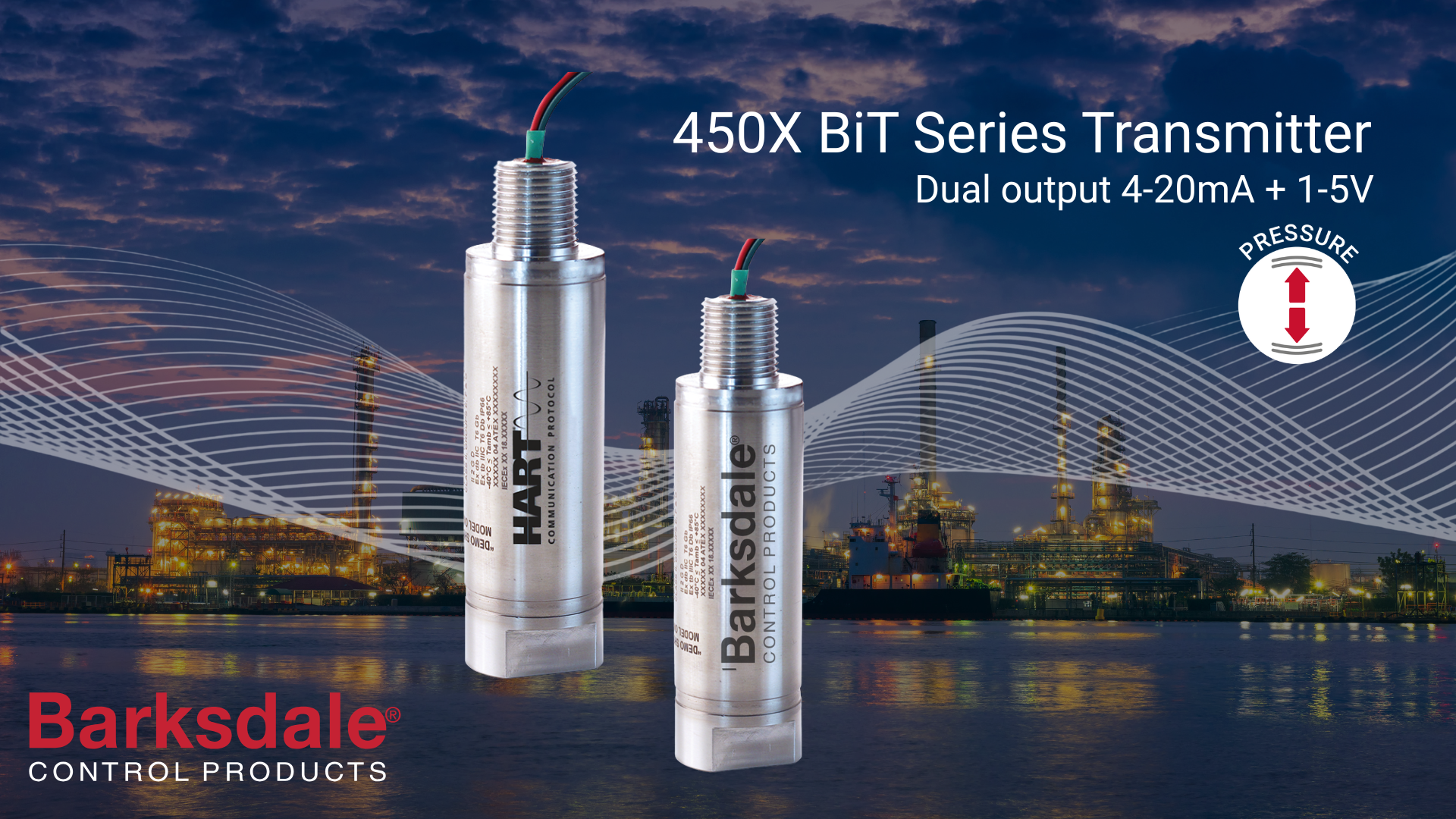
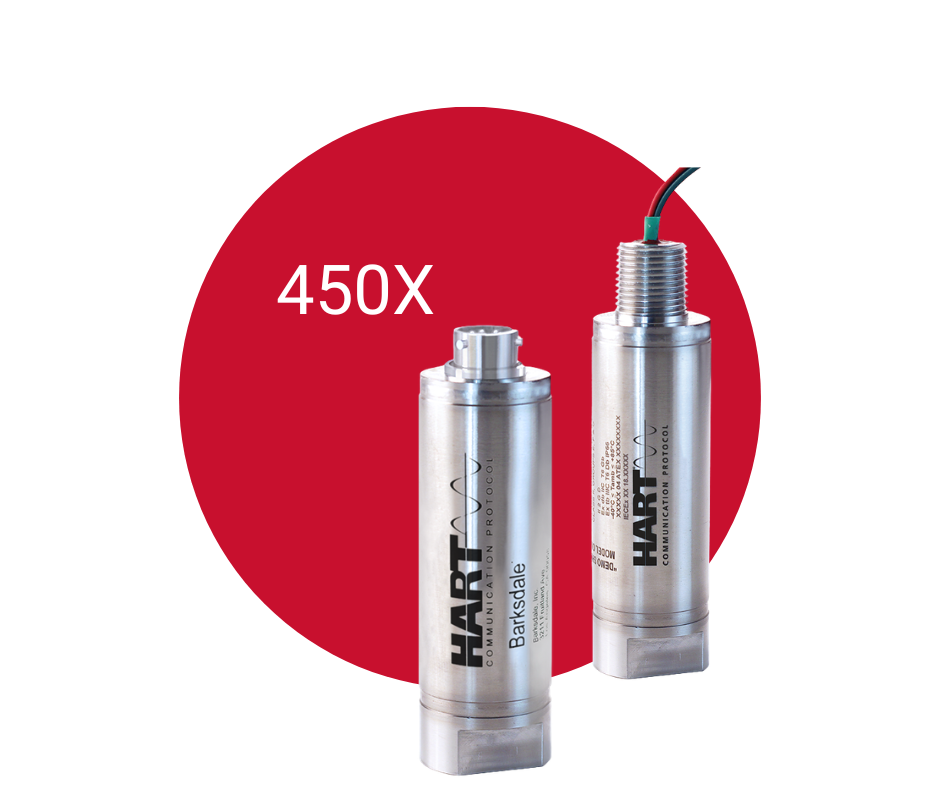
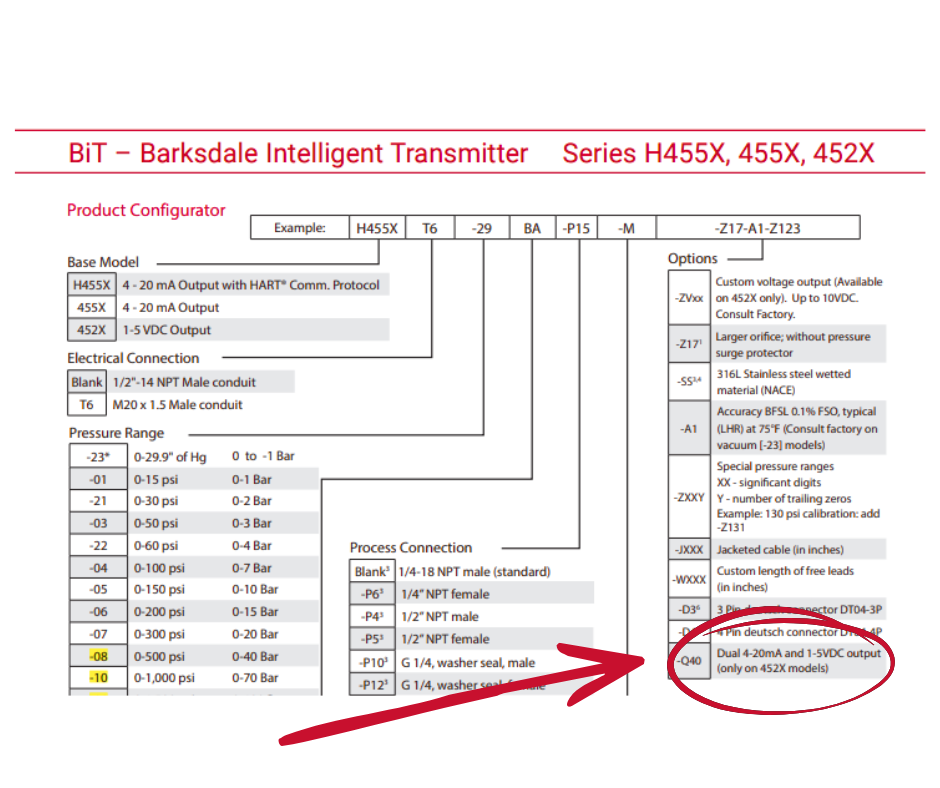
That’s why the latest enhancement to the Barksdale 450X BiT Series Transmitter is such a big deal. The new option (-Q40) available with the base 452X model now offers both 4–20 mA and 1–5 V outputs in the same unit, giving users an unprecedented level of adaptability without compromising performance or reliability and approved for use in C1D1 Explosion Proof environments.
Let’s take a closer look at what this means for operations and, just as importantly, for inventory management.
Why Dual Output Matters
Traditionally, buyers and specifiers have had to choose between a current loop output (4–20 mA) or a voltage output (1–5 V) when purchasing pressure transmitters. Each has its advantages:
4–20 mA Output
- Ideal for long cable runs
- Less susceptible to electrical noise
- Widely used in process control and industrial automation
1–5 V Output
- Common in test & measurement setups
- Integrates well with certain PLCs and data acquisition systems
- Useful when lower power draw is desirable
Until now, supporting both meant carrying two different transmitter models—one for each output type. That meant more SKUs, more forecasting complexity, and more risk of inventory mismatches.
The new dual-output capability removes that barrier completely.
The Advantage: One Transmitter, Multiple Applications
With the new configuration, a single 450X BiT transmitter can serve equipment that requires current loop signaling and systems that need a voltage output. This opens the door to a wide range of advantages:
1. Simplified Inventory Management
This is the biggest win. When one transmitter can support multiple signal standards:
- Fewer SKUs need to be stocked
- Lower carrying costs
- Reduced chance of ordering or stocking the wrong model
- Simplified forecasting and replenishment cycles
Teams can finally move away from maintaining separate bins—and budgets—for “mA” and “V” versions of the same transmitter.
2. Streamlined Field Service
Field technicians no longer have to wonder which version is installed at a location or load multiple versions in a service truck. The dual-output unit becomes a "one-size-fits-all" service replacement.
3. Greater Flexibility in System Upgrades
Plants evolve:
- A new PLC might need voltage input.
- A legacy controller may only accept 4–20 mA.
With dual outputs, the transmitter adapts to both current and future requirements without needing replacement.
4. Reduced Training Burden
Fewer model variations mean technicians, engineers, and procurement teams all have less complexity to manage. Consistency helps avoid mistakes and improves efficiency across the organization.
Built on the Reliability of the 450X BiT Series
The dual-output option doesn’t change what users already love about the 450X BiT transmitter:
- Rugged construction
- High accuracy and stability
- Explosion Proof Approval for Hazardous Environment
- Trusted Barksdale engineering
The new output flexibility simply enhances an already dependable product line.
A Smart Move for Operations and the Bottom Line
In many facilities, small changes can have big financial impact. The introduction of dual output on the 450X BiT transmitter is one of those rare upgrades that improves:
- Efficiency
- Ordering simplicity
- Field flexibility
- Total inventory cost
It’s a technical enhancement that brings real-world, day-to-day value across the entire lifecycle of the product.